Salma Kattan: Passion, purpose, and a new way to play life.
Communication major student
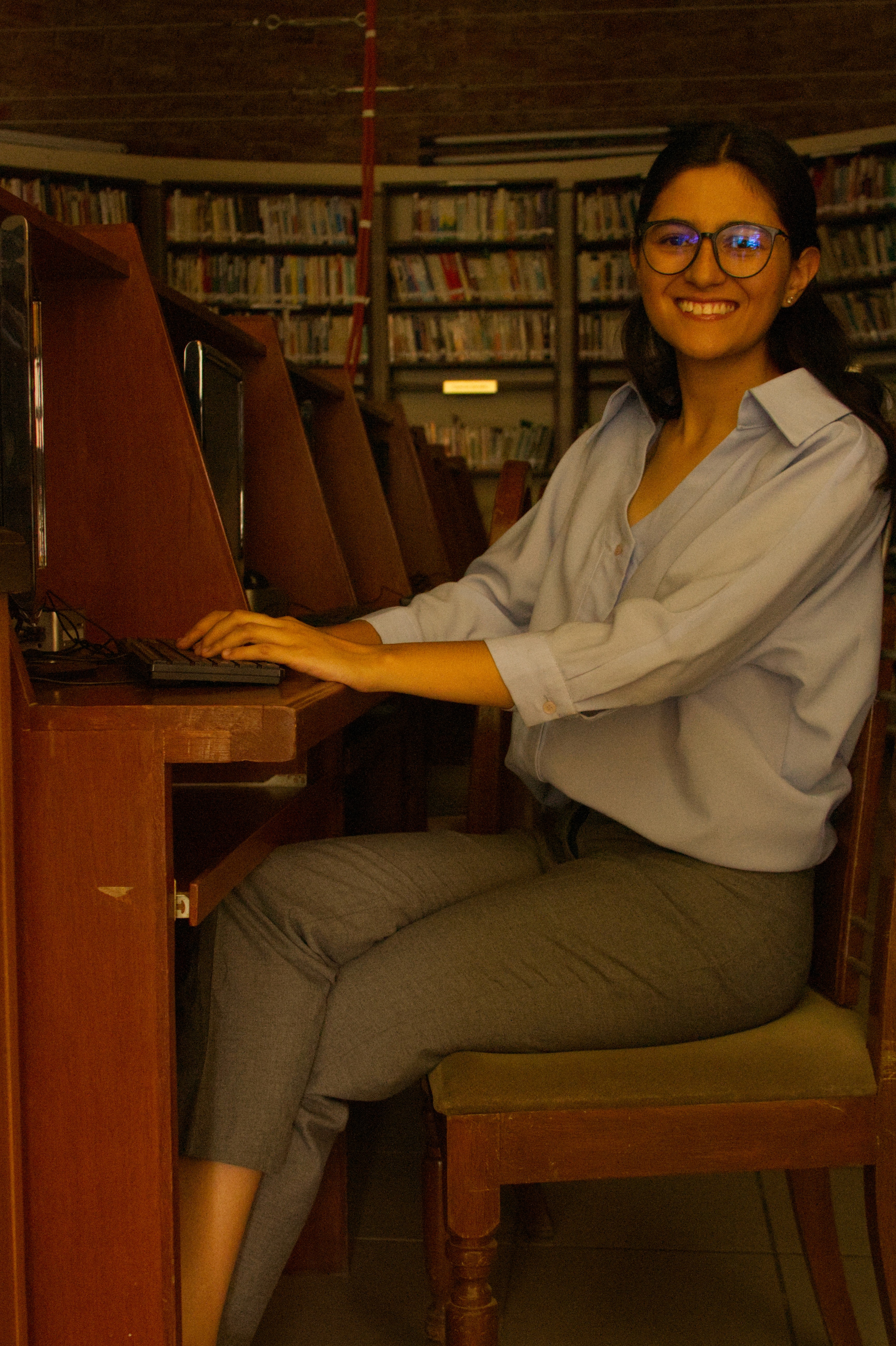
Salma Kattan was told that her biggest passion wasn't meant for her, that it wasn't a thing for girls. Those comments didn't discourage her. In love with the most popular sport in the world, soccer, in her first year in the Communication career she started working as a radio journalist and covered sports events for the newspaper Opinión. This opened the doors to a traditionally male-dominated field. Today, she is in charge of communication for the professional division team Universitario de Vinto and is a partner in one of the country's most well-known coffee selling brands. Salma is an example of resilience and perseverance.
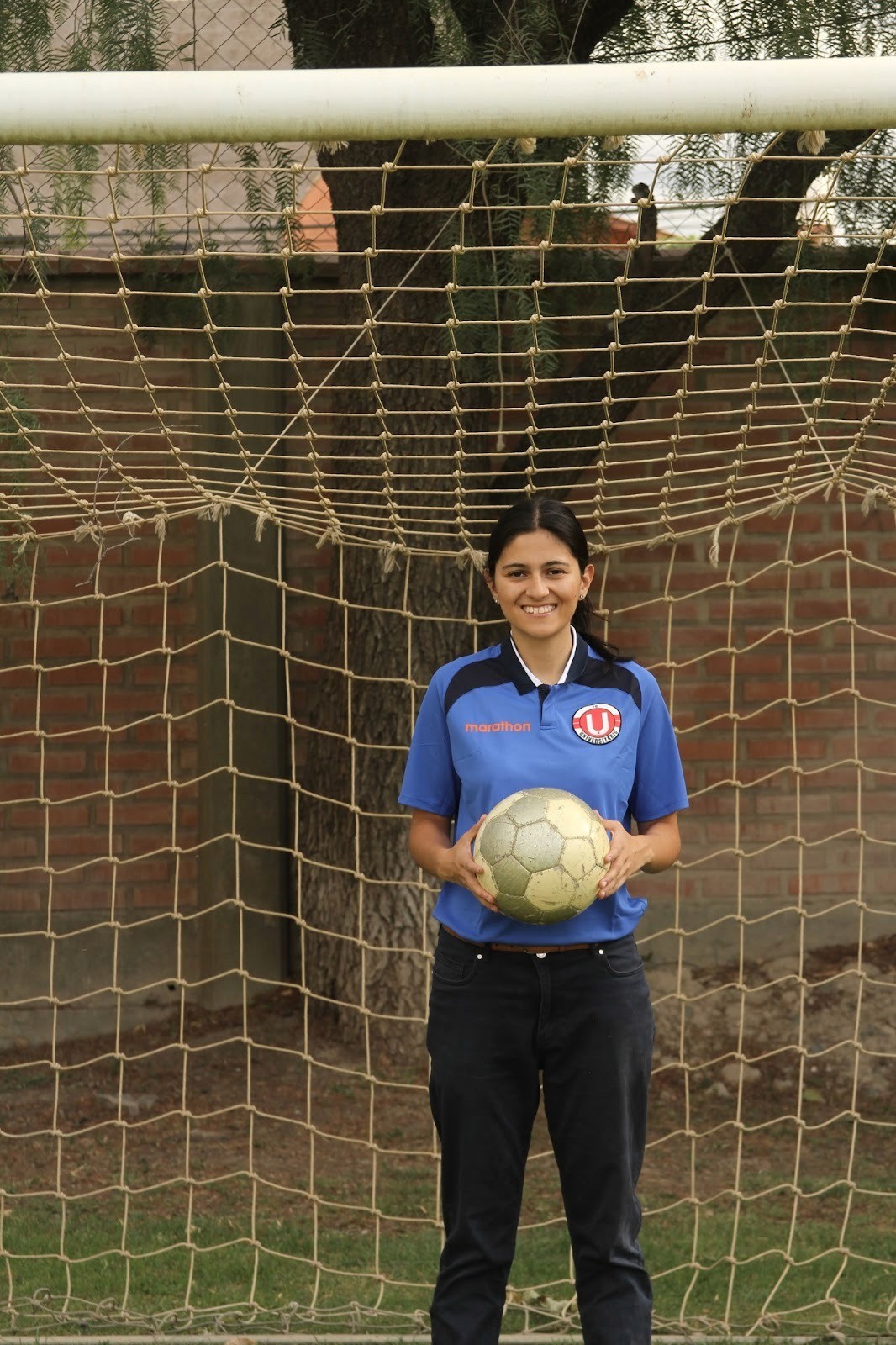
How did your story with soccer begin, what did it mean to you as a child and what place does it occupy in your life today?
My story with soccer began when I was very young, almost without realizing it. It was that moment of the day when everything made sense: recesses playing with my friends, weekends dreaming of soccer jerseys that I saw on the street, or simply dreaming of being on a big field someday. As a child, soccer was my refuge and my way of expressing myself without speaking. Today, although I no longer play it the same way, it remains the center of my life. Everything I do: my work, my projects, even my studies, has a connection to soccer. It’s a passion that accompanies me, challenges me, and gives me purpose.
You once said that your dreams were “shattered with a kick”, what did you learn from that moment and how did it help you rebuild your path?
Yes, it was a phrase born from pain, but over time I understood it through resilience. When an injury or a situation takes away something you love, you feel lost. But that blow taught me to rebuild myself, to not define myself solely by what I did, but by what soccer had left me as a person. I learned that dreams can transform, that I could still be connected to what I love, even if it’s from another place. That phase helped me discover new ways to live my passion, and from there, everything I do today was born.
At what point did you realize that sports journalism could be a way to stay connected to soccer, but from another perspective?
I realized it when I started to have a strong desire to comment on what I saw: the players, the matches, the decisions inside and outside the field. In my house, almost no one watches soccer, so I felt the need to talk to someone, to share what I thought. And then I realized that I could turn that into something bigger: to tell, analyze, debate, and connect with others through that same passion. Sports journalism became that band-aid for the heart that I needed.
At your young age, you already work in the marketing area of FC Universitario and are a partner in a café, what has it taught you to undertake and take on such big responsibilities while studying?
It taught me that dreams are built through hard work, not just dreaming. Taking on big responsibilities as a young person constantly tests you: you learn to organize, to fail, to get back up, to trust your ideas, and above all, to prioritize; you put many things aside, trusting that everything will come back. Undertaking has made me appreciate every little achievement and understand that opportunities don’t come on their own; you have to seek them, even when it’s scary. Sometimes I feel tired, but I am also proud to see that everything I do makes sense and helps me grow.
The Communication career offers many doors, how do you feel that your training at UPB is helping you turn your passions into real opportunities?
UPB has given me much more than classes; it has given me vision and support. Something I value greatly is the support of my teachers: they have always been willing to guide me, give me advice, and even provide more personalized classes when I needed them. Thanks to them, I was able to seize more opportunities, grow in my projects, and connect what I learn with what I love. I feel that the university empowers me to transform my ideas into something concrete, to believe in my abilities, and to professionalize my passions.
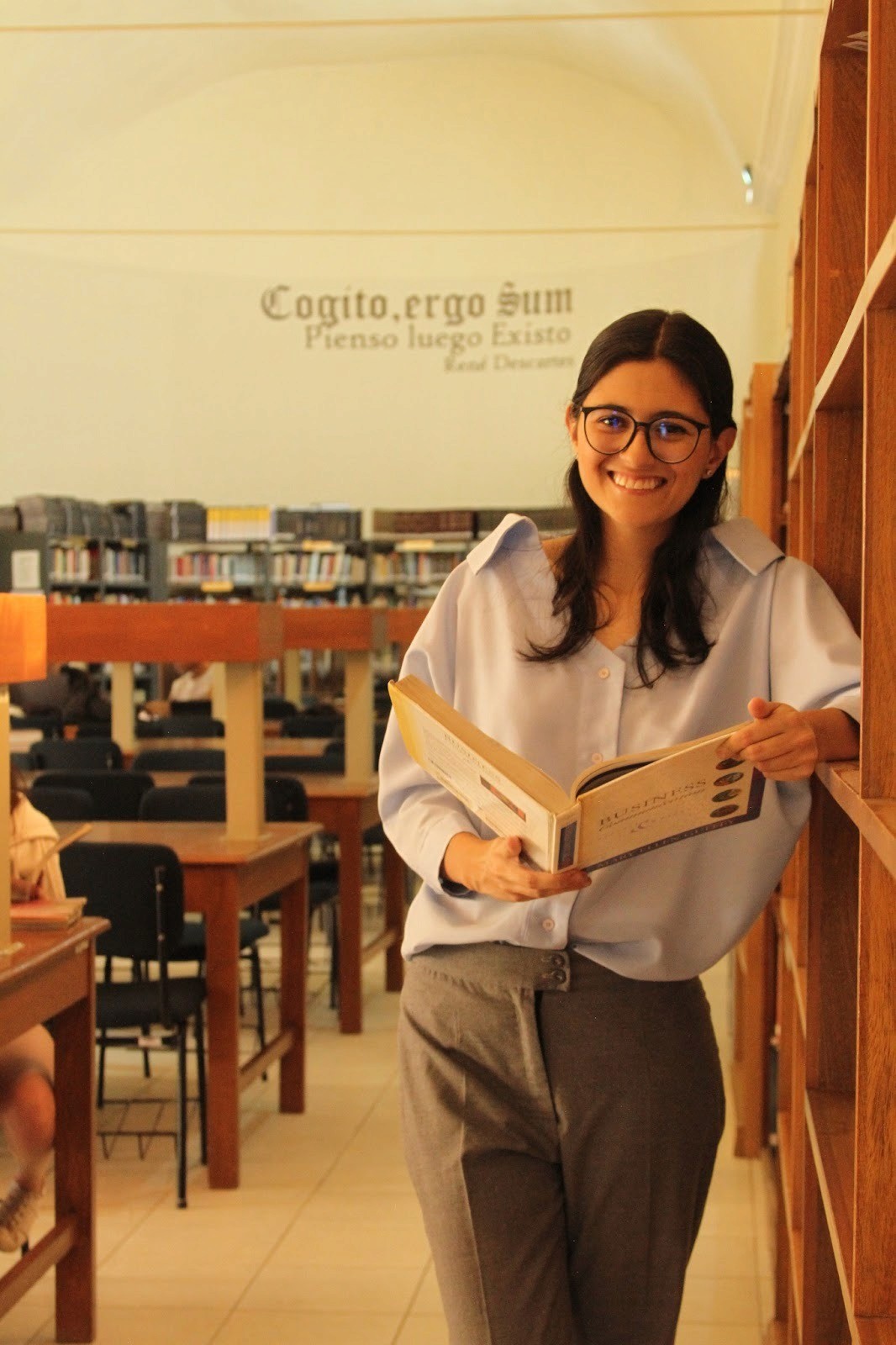
In sports, as in life, there are falls, injuries, and restarts, what would you say to young women who feel their dreams have been halted by an unexpected blow?
I would tell them to allow themselves to feel, that there’s nothing wrong with stopping and crying if they need to. But never to think that everything is over. Sometimes blows only change your path, not your destination. Dreams can be reshaped, reinvented, and even improved. Each fall leaves a lesson, and that strength will show when you get back up. The important thing is to not stop believing in oneself.
Among soccer, university, work, and entrepreneurship, how do you find balance and motivation to keep growing?
Balance is relative, it doesn’t always exist as such. But I do try to keep my focus on why I do what I do. I am motivated by thinking that everything is part of the same dream: to grow, learn, and leave a mark. Some days the exhaustion weighs on me, but there’s also a part of me that enjoys being in motion. Knowing that I am building my path with effort and passion gives me energy to keep going.
How do you imagine the future of sports journalism done by women and what role would you like to play in that transformation?
I imagine it to be freer, more empathetic, and more diverse. I believe that women are changing the way we tell sports stories, bringing sensitivity, depth, and new perspectives. I would like to be an active part of that change, continue opening spaces, and demonstrate that soccer can also be narrated from the heart without losing professionalism. I hope my work inspires other girls to believe that they can also be there, where it once seemed there was no place for us.
INSIGHTS:
A book or movie that has marked you?: Interstellar. It marked me because of the relationship between the father and the daughter. My dad passed away when I was seven years old, and every time I watch the movie I feel it reflects that: that love and connection with someone can go beyond time, space, and life itself.
A person you deeply admire?: My mom. For her strength, her calmness, and her way of making everything seem possible even when it is not. She taught me that humility and perseverance open more doors than any talent.
A phrase or principle that guides your life?: “If you fall seven times, stand up eight.” I heard it when I was nine years old, and since then, it has stuck with me. Every time something gets complicated, I remind myself of it. It’s my reminder that no matter how many times something knocks you down, you can always get back up.
Your most valuable asset?: My resilience. It has been what allowed me to keep moving forward when I felt like everything was falling apart. Thanks to it, I learned to rebuild myself, adapt, and trust that everything has its moment.
A fear that you have learned to transform or that has left you a lesson?: The fear of failing. It used to paralyze me, but now I see it as part of the process. Failing also teaches you, shapes your character, and prepares you for what’s to come.
A favorite flavor or gastronomic experience?: The matcha from COFI, definitely. It calms me down and is a treat I could have always.